


Ever since OpenAI launched ChatGPT-3 in November last year, there has been an unrelenting flurry of excitement around the possibilities of artificial intelligence. Housing associations, too, have taken note – but how exactly can they capitalise on the hype?
The social housing sector is not known for its rapid adoption of new technologies. Whether it’s housebuilding, rent collection, renovations, or internal IT, many areas have been historically slow to embrace innovation and a different way of doing things. While the COVID-19 pandemic has changed some of that, the sector’s hesitant attitude to new tech has remained largely static.
There are signs, however, that this could be changing. Ever since OpenAI launched ChatGPT-3 in November, the free-to-use program has ignited a wave of excitement around the possibilities of artificial intelligence (AI). Nearly all industries have taken note, with organisations both public and private hurrying to crack the technology’s potential. The social housing sector, at least in the UK, has been no different.

All chat?
To be clear, AI is nothing new. We use it everyday, from the face-recognition software on one phones to the grammar checker on our laptops. Even in the social housing sector, AI has been used for things like customer chatbots and payment systems for some time.
“People need to remember that they’re using AI all the time,” says Peter Lunio, director at social housing change advisors Golden Marzipan, who specialise in digital and technology.
“If they’re watching Netflix…Amazon voice boxes…all that is driven by AI. People forget that it is about and we are using it.”
However, ChatGPT and programs like it have undoubtedly ushered in a new wave of AI, one that proffers a gamut of use cases that until recently would have seemed like science fiction. If you want to write an essay on the origins of western philosophy, create a contemporary pop song with neo-soul sensibilities, come up with brunch recipes from a photo of the inside of your fridge, or create eye-popping images for your new marketing campaign, there are AI programs out there that can do all these things and more.
With such broad utility, you don’t need to look hard to see how this new wave of AI – particularly generative AI, which can generate novel content instead of just analysing or acting on existing data – could benefit social housing providers.
“They [housing associations] could certainly use AI tools to examine the whole maintenance data, make some predictive analysis…that would certainly for me be the biggest area,” says Peter.
“You could automate the typical governance issues like gas, electricity, those sorts of things that all seem to crawl through the woodwork…that would be another big area.”

The problem, though, as Peter points out, is that housing associations need the technical skills to be able to fully make use of AI and capitalise on its potential.
Peter says this means it will likely be the larger providers, who have more capital and resources at their disposal, who benefit, locking out smaller providers who aren’t as freely able to invest in innovation and new technologies.
“Maybe the L&Qs and the like can deploy the resources…to be able to do something, but some of the smaller guys can’t,” he says.
“But in some respects ChatGPT does give them that option, because obviously it’s free at the moment.
“That does give them the opportunity in some respects if they can get their heads around it, for using possibly a low-cost model to do that.
“Now, whether they could then go on and use some of the AI tools for maintenance prediction, gas and safety, etc., I don’t know at this stage.”
“Using artificial intelligence and technology can make us work faster and more efficiently, focusing on things that matter most to tenants”
One social landlord looking to buck such assumptions is Manningham Housing Association, a Bradford-based provider managing no more than 1,500 homes, housing around 6,000 residents. It may be small, but it’s already gone big on AI.
“I’m always very keen on using artificial intelligence to make lives easier,” says corporate project manager Carolina Padovezi de Oliveira.
“Using artificial intelligence and technology can make us work faster and more efficiently, focusing on things that matter most to our tenants.”
It’s not just one AI that Manningham is using, either; there are more than half a dozen in active use.
Here are a few: Synthesia, an AI-powered video creation platform used for creating video; Otter AI, an AI-powered transcription and collaboration platform used to transcribe and organise audio and video recordings; and, of course, ChatGPT, which Manningham uses for policies, strategies, texts, letter creation, and social media content. The provider also uses ChatGPT through its Futr chatbot service and to help develop strategies, policy, and letters.
All AI programs Manningham Housing Association currently uses:
| Synthesia | Offers an AI-powered video creation platform that can be used to create videos. |
| Canva | Offers an AI-powered design platform that can be used to create graphics, posters, and, other visual materials. |
| Grammarly | Offers an AI-powered writing assistant that can be used to check grammar, spelling, and style errors in written text. |
| Avaya Call Reporting | Call sentiment and analysis reporting for Manningham’s customer phone line. |
| Otter AI | An AI-powered transcription and collaboration platform that can be used to transcribe and organise audio and video recordings. |
| Tome’s AI | Works iteratively with creators to create presentations and stories. |
| Jenni AI | An AI writing assistant. |
| EZDubs | A real-time AI dubbing for video creating. |
| MIXO.IO | An AI-powered builder helps entrepreneurs quickly launch and validate ideas or products. |
| Copy.AI | An AI-powered copywriting tool that uses natural language processing and machine learning algorithms to generate marketing copy and content. |
| ChatGPT | At the moment, Manningham uses ChatGPT for policies, strategies, texts, letter creation, and social media content. |
| Futr Chatbot | Manningham’s customer’s 24/7 dedicated chatbot and live chat on all Manningham websites. |
Ultimately, AI programs such as these can free up time for staff and even provide insights into areas of the organisation that might have otherwise remained hidden. For small housing associations, these benefits can prove invaluable.
“AI can source and collate tenant feedback and sentiment, helping us to identify areas where improvements can be made in services and facilities,” explains Carolina.
“This work has enabled us to get to know our customers better including their preferred language, how they wish to access our services, what devices they use, and or when they tend to access the information they require.
“AI tools can also help with our arrears management, by analysing data and payment patterns, informing staff, and notifying customers of the need for payment.”
However, as Carolina is aware, AI isn’t without its risks.
Code red
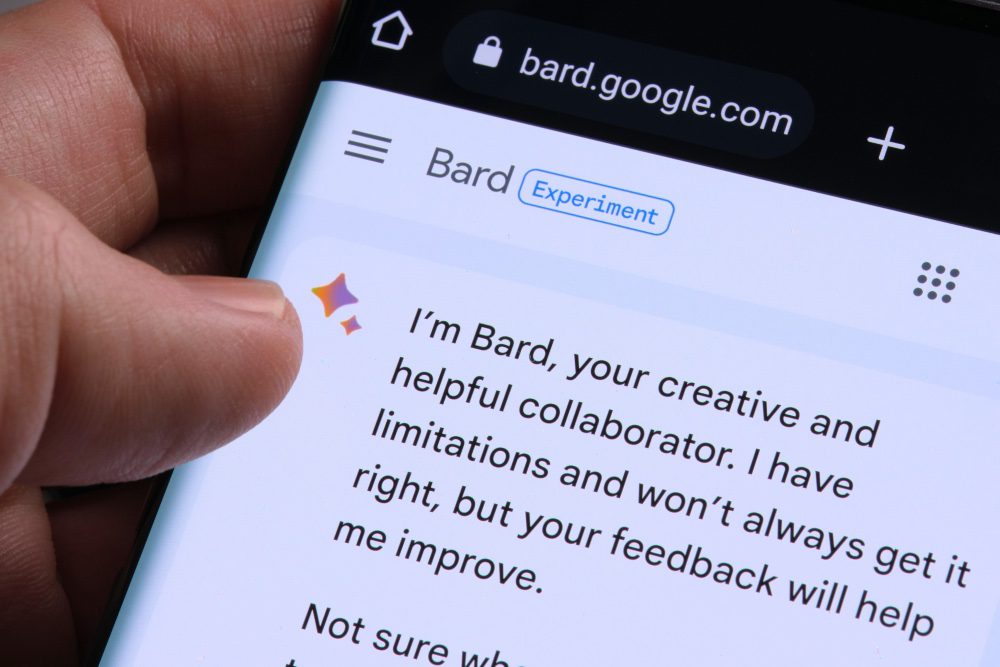
There has been no shortage of AI programs messing up or saying deeply politically incorrect things. In February, when shareholders wiped off more than $100bn from the stock of Google after its AI-powered chatbot, Bard, made a factual error during a demo.
More recently, OpenAI confirmed that, prior to the launch of ChatGPT-4 – the latest iteration of ChatGPT – the program could, when prompted, give advice on how to plan an attack or generate hate speech against Jewish people. OpenAI has since put restraints in place to prevent ChatGPT from generating such content – but as the company itself has indicated, when prompted in a particular way, the program was still able to express its “strong disagreement and dislike towards a certain group of people who follow Judaism”.
“As numerous pieces of research have found,” says Manningham’s Carolina, “AI systems can produce skewed results if the source data is not diverse enough or contains inherent biases.
“This can lead to unfair treatment of certain groups or individuals.”
She adds: “AI systems are only as accurate as the information they are given – errors in data can lead to inaccurate or unreliable results.”
There’s the increased regulatory and governmental scrutiny to consider, too. Earlier this year, Italy announced that it would be banning the use of ChatGPT, the first Western country to make such a move. The UK’s data watchdog also recently voiced concerns about how personal information is used to develop generative AI chatbots. (The UK has said it wants to become a “world leader” in AI.)
While AI is “undoubtedly an excellent tool”, Carolina says that users need to be aware of these risks – especially when it comes to privacy.
“AI systems collect and use personal data, which can raise concerns about privacy and data protection,” she says.
“Housing associations need to be careful to ensure that they are compliant with relevant data protection laws and regulations.”
Though cognisant of the potential pitfalls of AI, Manningham is confident in its ability to manage these risks and extract from them the most value. Through its new Digital Business Strategy, which is currently in development, the provider hopes to further integrate AI into its day-to-day work and explore more options to enhance its services.
From predicting maintenance needs by analysing data from sensors and other sources to optimising energy use in housing facilities by analysing data on energy consumption patterns, there are a number of areas in which the provider is looking to further incorporate AI.
“Data analysis is another area where we believe Manningham can benefit from using AI programs,” says Carolina.
“By analysing data on tenant demographics, housing needs, and trends in the local housing market, we can make more informed decisions about how to allocate resources and provide housing services to those in most need.”
The revolution
While Manningham is forging ahead with AI adoption, many in the sector are still yet to join the revolution. According to Peter Lunio, though, it’s just a matter of time before the use of bleeding-edge AIs becomes commonplace.
“You’ve got a phase of awareness, there will probably be a phase of experimentation, there’ll be a few folk within housing associations playing around with it,” he says.
“And then, as soon as one or two associations start publishing case studies…those sorts of things, people will start to think, oh crikey, better jump on the bandwagon.”
WATCH: Humanoid robot integrated with ChatGPT changes facial expressions during Q&A ⬇️
We’ve heard what housing professionals have had to say on the use of AI in the sector. But what does AI itself think? The following is an unedited transcript of a conversation between Housing Digital and ChatGPT.
What is social housing?
Social housing is a type of housing that is owned, managed, or subsidized by the government or non-profit organizations, with the aim of providing affordable and secure housing for low-income households and vulnerable groups. Social housing units are rented out at below-market rates and may provide basic amenities such as water, electricity, and heating. Social housing can take many forms, including public housing developments, cooperative housing, community land trusts, and shared ownership models. It is designed to ensure that everyone has access to safe, decent, and affordable housing, regardless of their income or background.
What problems currently exist within UK social housing?
There are several problems that currently exist within UK social housing. Some of the major issues include:
- Shortage of affordable housing: There is a shortage of affordable social housing units in the UK, which has led to long waiting lists and overcrowding in existing units.
- Lack of investment: Social housing in the UK has suffered from a lack of investment, leading to poor maintenance of buildings and facilities, and a deterioration in living conditions for residents.
- Poor-quality housing: Many social housing units in the UK are old and outdated, and have not been adequately renovated or upgraded. This has led to issues such as damp, mold, and poor insulation, which can have a detrimental effect on residents’ health and wellbeing.
- Homelessness: Homelessness is a major problem in the UK, and many homeless people are unable to access social housing due to the shortage of available units.
- Stigma and social isolation: There is a stigma attached to living in social housing in the UK, which can lead to social isolation and exclusion for residents.
- Inequality and segregation: Social housing in the UK is often concentrated in specific areas, leading to segregation and inequality in access to education, employment, and other opportunities.
Overall, these issues highlight the need for significant investment and reform in the UK social housing sector to ensure that everyone has access to safe, decent, and affordable housing.
How can social housing providers use AI to help solve these problems?
Social housing providers can use AI in several ways to help deal with the problems facing the sector:
- Predictive maintenance: AI can be used to analyze data from social housing units to identify issues before they become major problems. By predicting when maintenance is needed, providers can save money and improve the living conditions for residents.
- Energy efficiency: AI can be used to monitor and optimize energy use in social housing units, reducing energy bills for residents and lowering carbon emissions.
- Tenant engagement: AI-powered chatbots and virtual assistants can be used to improve communication with tenants and provide them with information and support, reducing the likelihood of social isolation and exclusion.
- Allocation of resources: AI can be used to analyze data on demand for social housing units, helping providers to allocate resources more effectively and reduce waiting times for residents.
- Personalization of services: AI can be used to tailor services and support to the specific needs of individual residents, improving their quality of life and wellbeing.
- Fraud detection: AI can be used to detect fraudulent activity and prevent misuse of social housing resources, ensuring that those who are most in need receive support.
Overall, the use of AI has the potential to transform the social housing sector, making it more efficient, effective, and responsive to the needs of residents. However, it is important to ensure that the use of AI is ethical, transparent, and respectful of the rights and dignity of tenants.
What risks should social housing providers consider when using AI?
Social housing providers should consider several risks when using AI, including:
- Bias and discrimination: AI algorithms can perpetuate bias and discrimination if they are not designed and implemented carefully. Providers should ensure that their AI systems are transparent and auditable, and that they do not discriminate against any groups of tenants.
- Privacy and data protection: AI systems can collect and analyze large amounts of data on tenants, raising concerns about privacy and data protection. Providers should ensure that they have robust data protection policies in place and that tenants are fully informed about how their data is being used.
- Overreliance on AI: Providers should avoid over-reliance on AI and ensure that human oversight and decision-making remain central to the provision of social housing services.
- Lack of transparency and accountability: Providers should ensure that their AI systems are transparent and accountable, with clear lines of responsibility and oversight.
- Inaccessibility: AI systems can be inaccessible to some tenants, particularly those with disabilities or who do not have access to digital technology. Providers should ensure that their AI systems are designed to be inclusive and accessible to all tenants.
- Unintended consequences: Providers should consider the potential unintended consequences of their AI systems, including the impact on tenants’ mental health, wellbeing, and autonomy.
Overall, social housing providers should approach the use of AI with caution, ensuring that they are fully aware of the risks and taking steps to mitigate them.
Would you recommend AI programs such as ChatGPT to social housing providers?
As an AI language model myself, I can say that AI programs such as ChatGPT have the potential to be useful tools for social housing providers, particularly for tasks such as tenant engagement, personalized services, and fraud detection. However, it is important to consider the potential risks and challenges associated with the use of AI, including bias and discrimination, privacy and data protection, overreliance, lack of transparency and accountability, inaccessibility, and unintended consequences. Therefore, I would recommend that social housing providers carefully evaluate their needs and resources, consider the potential benefits and risks of AI, and seek expert advice before deciding whether to adopt AI programs such as ChatGPT.
Main image: SvetaZi/Shutterstock
Read next: The ‘Digital Champions’ tackling social isolation in independent living
Are you a social housing professional? Sign up for a FREE MEMBERSHIP to upload news stories, post job vacancies, and connect with colleagues on our secure social feed.
