

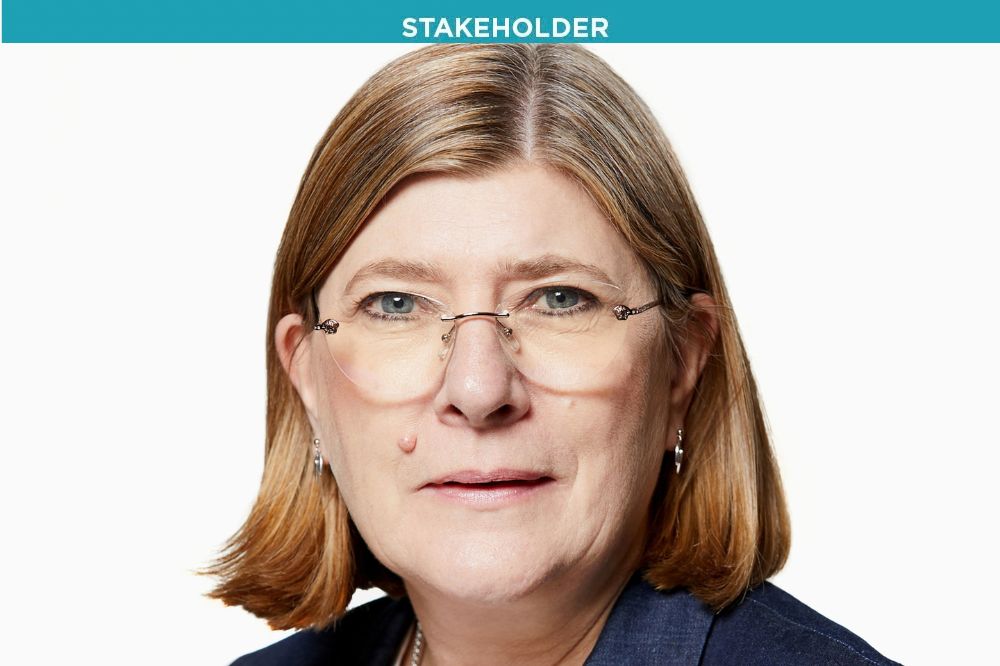
As MLL Telecom approaches its 35th anniversary, business development director Gail Harvey explains why the network specialist is a great fit for social landlords
In a sense, you might say MLL Telecom has grown up with the UK’s mobile network infrastructure; certainly it’s where the specialist business cut its teeth, as it were.
The company was founded some 35 years ago, initially built around supporting mobile network operators. First and foremost was the relationship it forged with Vodafone, which at the time was rolling out its 2G network across the UK.
“MLL provided a lot of the engineering skills that supported Vodafone in that rollout,” said Gail Harvey, business development director for the company’s public sector team.
Since then, the business has grown and expanded from that sound foundation; fast-forward to today, and it is bringing its expertise into the social housing sector.
As Harvey points out, it is very much a natural fit with the services and capabilities it has long been offering the public sector.
The company’s public sector career began somewhat indirectly, through Suffolk County Council. BT held the prime contract for the council’s wide area network but subcontracted the radio connectivity element to MLL, whose point-to-point radio networks suited the county’s flat, rural geography.
When BT stepped back from the contract, MLL took over as prime contractor: “That’s how we got into public sector. It was our first major customer,” Harvey says. Suffolk remains a client to this day.
Harvey joined MLL 11 years ago, shortly after the firm secured a place on the Crown Commercial Service’s network services framework. Building the public sector arm from two people, she says, meant starting “really from scratch,” with Land Registry – again, still a customer – as the first network services win.
MLL’s pitch to public sector clients rests on what Harvey calls a “carrier integration model”. Rather than relying on a single national carrier, MLL holds relationships across BT Wholesale, Vodafone, Virgin Media and altnets such as CityFibre, choosing the most cost-effective connectivity site-by-site. It then layers its own managed service, including round-the-clock support, over the top.
In the last five or six years, many long-standing customers have moved from MPLS networks to full SD-WAN, with MLL’s Fortinet overlay, which Harvey says gives customers far more granular, self-service control over their own network configuration.
The business now serves several hundred customers and roughly 6,000 sites across the UK, spanning local authorities, blue-light services including Northumbria Police, the NHS, arm’s-length bodies such as Land Registry, Ofgem and the National Nuclear Laboratory, and schools.
Bringing the technology home
Housing associations are MLL’s newest client base.
Over the past couple of years it has picked up two significant contracts: one with Welsh housing association Codi Group (formerly Pobl), and the other with Moat Homes in the south-east of England (see below). More recently the company has secured a place on a Procurement for Housing framework.
Harvey believes the fit is a natural one: “For us having won those two contracts, we definitely can see the need for that type of connectivity and managed service across the housing sector.”
Landlords need robust corporate networks, she says, but increasingly also need to give tenants cost-effective broadband and to support technology such as Internet of Things sensors monitoring damp, mould and utility use within properties. The same infrastructure, she notes, can carry all three without the need for separate networks.
That need is sharpened by the forthcoming Awaab’s Law requirements, and by Openreach’s withdrawal of the copper network, due in January, which is forcing landlords to replace ageing careline and alarm systems. MLL does not supply the alarm technology itself but provides the underlying connectivity.
“If someone has a fall and they press the pull cord, it’s using our connectivity to alert someone that there’s a problem,” Harvey explains. Moat Homes’ switch away from copper technology ahead of the Openreach deadline was, she says, “a big refresh programme.”
Two further public sector customers, the Royal Borough of Greenwich and Fife Council – both significant social housing managers – have separately approached MLL about improving tenant connectivity, while sector consolidation is creating further opportunities.
A tailored approach
Harvey is keen to stress that MLL does not offer an off-the-shelf service: “We will sit and understand [a client’s] specific requirements and tailor the solution to meet their needs.”
That flexibility extends to commercial terms, with clients able to choose capital or operating expenditure models, and to complex projects such as merging two organisations’ legacy networks onto a single system without disrupting existing contracts.
Underpinning all of this is an in-house engineering team, including a network operations centre in Marlow staffed by qualified engineers rather than call-centre agents, and a UK-wide field engineering team.
Security, Harvey adds, is built into the network itself through Fortinet’s “security first approach,” combining perimeter firewalls with protection at each site.
For landlords, Harvey says the result is an adaptable, cost-effective network that can flex as organisations grow or merge, without the need for physical circuit upgrades. For tenants, it means reliable broadband and the connectivity to support technology-enabled care and environmental monitoring in their homes.
MLL may be relatively new to the business of social landlords, but they are tried and tested when it comes to delivering the solutions.
Strong beginnings
Back in July 2025, MLL Telecom won an initial three-year managed SD-WAN network services contract from what was then Pobl Group.
Valued at more than £700,000, the contract supports a digital unification programme following Pobl Group’s merger with Linc Cymru, which created Wales’ largest housing association ahead of a rebrand to Codi Group from January this year.
The enlarged group manages more than 24,000 homes in Wales, employs more than 3,000 people and plans to deliver more than 4,500 new homes over five years. MLL transitioned around 200 Pobl and Linc Cymru legacy MPLS sites onto a unified SD-WAN network with zero-trust architecture, managed real-time threat detection and integration with Azure Public Cloud.
At the time the contract was announced, Pobl’s head of technology operation, Peter Murphy, said: “This is about more than just technology – it’s about building a secure, scalable, and future-ready digital foundation for over 200 sites across Wales.
“By merging two legacy MPLS networks into a single SD-WAN managed service, we’re enabling seamless collaboration, enhanced cyber resilience and smarter service delivery for our teams and tenants alike.”
Moat got onboard with MLL in October 2025, with an initial three-year contract valued at around £500,000. It was procured under the YPO Framework, with an option to extend for a further two years.
Under the contract, MLL transitioned BT copper lines connecting personal and property alarm systems at 83 Moat social housing sites to FTTP and FTTC fibre circuits. The company’s team worked alongside Moat’s Lifeline Services provider, which manages the housing association’s alarm and sensor systems covering security, lifts, smoke detection, flooding and personal wellbeing.
Housing Digital stakeholder MLL Telecom is a long-established and trusted provider of connectivity solutions to the UK Public Sector
Main image: Gail Harvey, business development director, public sector team, MLL Telecom
Read next: PCH takes 45 more homes at Exeter scheme
Are you a social housing professional? Sign up for a FREE MEMBERSHIP to upload news stories, post job vacancies, and connect with colleagues on our secure social feed.